
ARE THE KIDS ALL RIGHT?
How the pandemic has reshaped the lives of Ontario's studentsBy Kate McCullough
Every student has a story from March 12, 2020, the day the pandemic closed schools, the world shut down and rearranged their lives.
Aisha Mahmoud, a student in Hamilton, Ont., was at her first high-school soccer tryout when her coach told her that Ontario would close its schools for another two weeks after March Break to fight the spread of COVID-19.
On that day, Arianna Chua, in Grade 8, was watching the news at home in Milton, Ont., in the greater Toronto region. Within weeks, their dad’s business, a Filipino food store, would be decimated. A few months later, they would miss graduation, leaving elementary school without any closure.
Jazzlyn Abbott, a student from Petawawa, Ont., two hours west of Ottawa, and a friend “went out with a bang” at a concert, her last social event for some time. Pretty soon, she would face months of isolation in her rural town.
“It was definitely kind of a shock because this had never happened before,” said Kaden Johnson, a Mississauga student with Peel District School Board. “One thing I was definitely not thinking about was how this would impact my future years because I didn’t expect it to last so long.”
Yet, two and a half years later, this is top of mind for Kaden, Jazzlyn, Aisha, Arianna and about two million students across the province as they absorb the pandemic’s devastating effects on primary and secondary education in Ontario, the most populous province in Canada.
In June, students finished a third “pandemic year” of school, defined for most by stress, isolation, erratic in-person learning, disruption of daily routines. It also brought grief – of illness-related loss, but also of friendships and a “normal” childhood.
The pandemic creeped into Canada in late January, 2020, and quickly spread. Less than two months later, the country shut down. In Ontario, stores, offices, clinics, movie theatres and schools were closed.
The streets of Toronto, the largest city in the country, stood still, save for near-empty streetcars and taxis. People were afraid to leave their homes and so those who could avoided it altogether. Overnight, Ontario became a ghost province.
For two and a half years, governments across the world struggled to address a public-health crisis. Meanwhile, another crisis emerged as kids’ lives were upended.
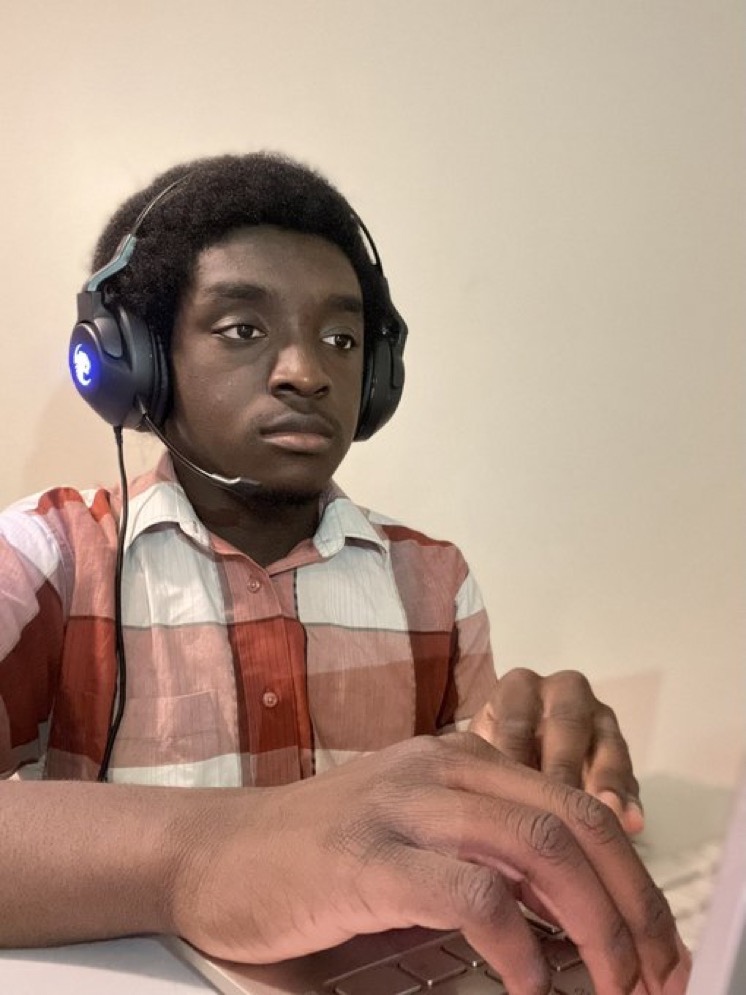
Kaden Johnson, a Peel District School Board student in Mississauga, Ont., has been learning remotely since March 2020. [Photo courtesy of Kaden Johnson]
Ontario schools closed longest in North America
Kids have suffered mentally, physically, socially and academically over the last two and a half years, and experts say school closures are largely to blame.
In Ontario, schools were closed to in-person learning for 220 days – about 44 weeks – in three academic years, more than in any other province or U.S. state and double that in British Columbia and Saskatchewan.
School closures in Ontario:
- March 14 to June 25, 2020 (104 days)
- 1 to 24, 2021 (21 days)
- April 8 to June 29, 2021 (83 days)
- 3 to 16, 2022 (14 days)
Vulnerable kids are hit hardest when schools close. And even when schools were open, a slew of public-health measures – masking, grouping students together in “cohorts” that do not interact with each other, screening and cancelled extracurriculars – dramatically altered the school environment.
Remote learning woes
With unpredictable internet and several family members to share it with, Ava Beggs estimates she missed several weeks’ worth of class time during the pandemic.
“I missed at least one full day of school work (a week),” said Ava, who is from Combermere, Ont., a rural community south of Algonquin Park. “But usually we knew it was coming.”
Ava, a Grade 11 student at Madawaska Valley District High School, describes herself as “good student.” She would check in with her teachers and get assignments in advance when she could. “I’d screen-shot it all in advance, so when the WiFi went out I could just do it on paper,” she said. “But you can’t keep up when you’re having that many issues. I’m pretty sure I missed a lot.”

Ava Beggs, a student from Combermere, Ont., south of Algonquin Park, says she missed weeks of school due to inconsistent Internet acccess. [Photo courtesy of Ava Beggs]
At its best, the internet would be “good for a few hours.” At its worst, it would “crash completely for, like, two days,” Ava said. Inconsistency was a guarantee.
Ava said her family tried to upgrade their internet, but there was a years-long waitlist. So, instead, Ava and her three siblings took turns connecting for school.
“We had to prioritize who was going on the Internet,” she said.
Across the province, students have reported insufficient and/or inconsistent access to internet and technology throughout the pandemic, despite an organized effort.
A Statistics Canada survey found that, pre-pandemic, nearly 60 per cent of households in Canada did not have enough internet-enabled devices for everyone in the home. Though school boards offered devices, including some that had data included, we know not all students who requested a device received one. Throughout the pandemic, several school boards advised parents they did not have enough devices for all students, the Globe and Mail reported in January 2022. Durham’s public school board limited devices to one per household. Short hundreds of devices, Hamilton’s public school board excluded kindergarten students from the device program altogether.
Similarly, a study by Ryerson University addressing internet and technology affordability found that 31 per cent of parents said in 2020 their kids would likely have to use public Wi-Fi to complete school work.
Teachers have said that, even when kids were logged into class, they may not have been mentally or emotionally present. Most of their students kept cameras off, unmuting their audio or typing in the chat function to ask or answer questions. This means even those who were logged in weren’t necessarily engaged, or even at their computers.
“I’d get out of bed and I’d get my laptop and then I go back to bed and then I’d just stare at the screen the entire day,” said Muhammad Bajwa, 17. “I was just there for the attendance for most of it, at the beginning at least, because I didn’t want to engage with the content that I was learning. I felt like I couldn’t, so I just didn’t.”
Though attendance was mandatory, some students simply stopped turning on their computers.
An August 2021 study led by Kelly Gallagher-Mackay, an education researcher with Wilfrid Laurier University in Brantford, Ont., showed that extreme absenteeism — when a student misses more than half of their classes — increased during the pandemic in both in-person and online classrooms. It was mostly common among elementary students learning online, the report found. Similarly, anecdotal evidence suggests kids have been absent more often during in-person learning than in previous years.
She said, overall, there was a three pre cent increase in chronic absenteeism, when kids miss more than 10 per cent of school days.
“We saw absenteeism go up, and that is no surprise because we told kids to stay home,” she said. “And many kids missed school because they were sent home.”
‘I have whole units that I’ve never studied’
Jazzlyn Abbott, a recent high-school graduate from Petawawa, two hours west of Ottawa, is worried.
Hoping to become a dentist, she is studying life sciences at McMaster University in the fall. But she isn’t sure she is prepared.
“Almost every course that I took in the past couple of years, we just skipped units because we didn’t have time,” she said. “I have whole units that I’ve never studied.”
Students say learning has suffered. They report frequent absences and lack of engagement in remote learning. Repeated transitions between in-person and remote – four over three school years – ate up class time.
In both remote and in-person learning, teachers were forced to skip entire units because they lost time or spent it trying to catch students up from the previous year.
“They didn’t take away as much or absorb as much as they usually do in a regular classroom, and that obviously is because we were out of the classroom,” said Aisha Mahmoud, incoming president for the Ontario Student Trustees’ Association (OSTA), an independent organization made up of elected student representatives in Ontario. “It’s a lot harder to engage and retain information when you’re not even seeing your teachers or your peers face to face.”
In an effort to investigate the impacts on student earning, the reporter reached out to more than 40 school boards with a request for student achievement data. Only one, Hamilton’s Catholic, responded by deadline.
At the Hamilton-Wentworth Catholic District School Board (HWCDSB), the use of the report-card code “I” (insufficient), typically used by teachers in rare cases where there isn’t enough evidence of learning to assign a mark, skyrocketed during the pandemic.
More than 80,000 “I”s were assigned to elementary students in the 2019-20 school year, up from less than 2,000 the previous year. Fewer “I”s – about 11,500 – were given out the following years (11,454 in 2020-21 and 3594 in 2021-22), but numbers remained higher than before the pandemic.
Also of note is that fewer Grade 9 students had eight credits by the end of the school year than before the pandemic. In 2022, just 80 per cent of Grade 9s obtained the credits they needed to be on track the following year, down from 87 per cent in 2017.
“This points to potential gaps in learning, created largely by the circumstances of remote learning – students say in some cases teachers skipped entire units as they scrambled to adapt to a new format – student absenteeism and disengagement with the material.
Many students say their grades suffered minimally or not at all. Data from Hamilton’s Catholic board shows that average secondary grades increased by nearly two per cent, from 74.4 in 2016-17 to 76.2 per cent in 2021-22. Average elementary grades followed the same trend. Open-book assignments and tests and more lenient marking as students trudged toward the finish line of each pandemic year likely saved their grades, some students say.
“If it would have been the same strict format that we follow in school, I do think my grades would have done worse, just because I didn’t feel like I understood the material that I was learning,” Jazzlyn said.
Preliminary findings from the Toronto District School Board (TDSB) show that average marks for high schoolers increased by four percentage points since the pandemic began, rising from 72 per cent in 2018-19 to 76 per cent the following year. Grades remained steady through the first half of the 2020-21 school year.
HWCDSB data shows a similar trend, with just 70 per cent of Grade 1 students reading at grade level by the end of 2022, compared to 76 per cent in 2017.
The TDSB report says there are several factors at play: teachers may have approached grading differently, virtual learning offers a variety of platforms and different ways to demonstrate learning and culminating activities included “a broader range of possibilities” and most final exams – typically worth 30 per cent of a student’s grade – were cancelled.
Meanwhile, 84 per cent of 36,000 TDSB middle- and high-school students surveyed in 2021 felt they learn more in person, showing that grades may not the only – or the best – indicator academic achievement. Students across the province echo that sentiment: “If you’d asked me to recall things I learned, I wouldn’t have been able to recall them just because it wasn’t cemented in my brain,” Jazzlyn said.
In the same report, a “concerning” assessment of early-reading abilities among Grade 1 at the Toronto District School Board (TDSB), the province’s largest, revealed that fewer students were reading at grade level than before the pandemic. Forty-five per cent of first graders were reading at grade level in January 2021, down from 54 per cent two years earlier.
Early reading, research has shown, is a key indicator for future academic success.
The TDSB data helpfully points out emerging patterns, but provides only snapshot of students at one school board. Experts say no other school board that they know of has assessed and analyzed learning in a publicly available report. Annie Kidder, executive director for People for Education, said there is a “built-in inequity” among school boards, and not all have the resources to conduct research.
“Some boards are very big and have way more money, so they have huge research departments,” she said.
Experts say provincewide data collection of indicators like literacy and numeracy, high-school credit accumulation, absenteeism, technology distribution and waitlists for special education programming and individual education plans (IEP) could have helped educators better understand and support student needs in the future.
While there’s some Canadian research that points to lost learning, Ontario researchers are looking abroad for clues to how kids at home are doing.
A U.S. study from July 2021 – a year and a half into the pandemic – estimated kids from kindergarten to Grade 12 were, on average, five months behind in math and four months behind in reading. Overall, U.S. schools were closed for less time than in Ontario.
Kidder said these quantitative studies represent “one narrow way” of identifying and explaining so-called learning loss. But assessing how kids are doing after a crisis is more complex.
In an October 2021 McMaster University study of more than 7,500 Ontario parents, 63 per cent reported “moderate to high levels of concern” about their child’s learning and education. Other concerns included managing remote learning, anxiety and behaviour.
Sabia Irfan’s “COVID-cautious” parents didn’t want her to return to a physical classroom in fall 2020. But that meant skipping the Grade 10 “pre-IB” program at Colonel By Secondary School in Ottawa, which was only offered in-person.
When she started the I.B. program in Grade 11 she “felt behind.” “My teachers had taught the majority of the students in Grade 10 pre-IB because they came physically,” she said. “So they were like, ‘We’ve already taught you this last year, you should be OK on this.’ I wasn’t there, so whatever they taught … I had never seen it before. And I had to teach her myself basically from home.”
Sabia, a student advocate and aspiring journalist, began to write opinion pieces for the Ottawa Citizen to get the message out to decision-makers and adults supporting students. She didn’t feel local school boards were listening to students. “I saw my friends, fellow students in not the best circumstances … they weren’t very happy,” she said.
“The students who most needed to be heard weren’t listened to, particularly, so they didn’t have a chance to say what they wanted to say,” Sabia said, adding that students expressed “anger and frustration” over disruption in their lives.
Looking ahead to the upcoming school year, Jamie Price knows her kids will have gaps and is working to “normalize” it. Instead of focusing on school, she is helping her kids improve their mental health and regain confidence after a turbulent period.
She regularly reminds her Grade 6 daughter, who missed chunks of the three previous school years, that she’s smart and will be able to pick up missed material quickly.
“I think everybody is going to have some learning to catch up on. Everybody’s going to have some gaps in their learning,” she said. “I’m not worried about her ability to learn.”
‘Dramatic drop’ in extracurriculars essential to learning
Aisha Mahmoud, 17, was at her first high school soccer tryout when the coach cancelled the tryout and told students that schools were going to close for two weeks.
“I remember asking her, like, ‘is our tryout next week going to be pushed back to after March Break?,’” she said. “The first time I played for my school soccer team was two years later in Grade 11.”
According to People for Education research, there was a “dramatic drop” in Ontario schools offering extracurriculars.
“The thing that … I’m not sure we are paying enough attention to is the impact of the loss of everything else that’s connected to schools,” said Annie Kidder, the organization’s executive director. “Kids across the country lost extracurricular activities, they lost a lot of the activities that are about human relationships.”
In 2021-22, 45 per cent of Ontario elementary schools offered no extracurriculars, such as sports, music, performing arts, clubs and field trips – a massive decline from pre-pandemic years, when all of the schools offered broader opportunities for students. At the high school level, that number was 23 per cent.
Fewer than 30 per cent of schools offered field trips, and fewer than 10 per cent (five per cent elementary, eight per cent secondary) offered sports. Before the pandemic, almost all schools offered field trips and sports.
“Student participation in broader opportunities through their school encourages the development of skills such as thinking creatively and critically, collaborating, communicating effectively, learning to learn, and developing a sense of self and society,” the People for Education report says.
The report cites a 2020 study from B.C. of Grade 7 students that showed participation in extracurriculars is linked to better mental health.
Many kids rely on gym class, after-school programming and organized sports — most of which were cancelled for at least a year — for exercise, as well as social interaction. This means that kids who were already finding it difficult to meet Canada’s daily physical activity guidelines were even less likely to get the exercise they need.
“For lots of kids, school is the only place that they have access to all of these other things, to sports and to music and to all of that sort of so-called enrichment,” Kidder said. “So the other impact that’s worrying is the amplified inequity because, for families who could afford it, they could augment some of the things that kids weren’t getting.”
Some principals from schools in poorer areas reported not having enough money for virtual assemblies, clubs, performances and other community-building activities. All available technology was allotted to students for learning.
Schools made efforts to adapt. A principal in the report said, in place of clubs, their schools had cohorts lead activities, such as organizing a food drive. Performing arts students at one Hamilton high school performed the Broadway musical “Cats” virtually, each student recording vocals and filming scenes individually and later edited together.
One Richmond Hill student, who recently won a student award for entrepreneurial initiative, started the York Region District School Board’s virtual chess league with 10 high schools.
But the consensus from students is that virtual wasn’t a fulfilling replacement for clubs and performances.
“It’s been a struggle to run initiatives online and get students engaged,” said Arianna Chua, 16, at St. Francis Xavier Catholic Secondary School in Milton. They said most online clubs – except for meeting-style clubs like student council, of which Arianna is co-president – didn’t work at all. Conversation was limited by how efficiently students could unmute themselves to chime in, Arianna said.
Dr. Jean Clinton, a child psychiatrist, said the absence of sports, clubs, music and other extracurriculars has had a “big impact on kids.” “There’s that absence of normal developmental exposure and then swap in the massive increase in screen time and social media,” Clinton said. “It’s not that that absence was filled in by all of these positive other experiences.”
In July 2020, 64 per cent of Canadian parents were concerned about the amount of time their kids spent on screens, according to a Statistics Canada survey. Social media isn’t all bad, she said. It, along with FaceTime and messaging apps, has allowed kids to maintain a degree of connection to their peers. But the numbers suggest “many, many hours on social media, rather than other activities, is taking a hit on their wellbeing,” Clinton said.
Pandemic ‘thwarted’ child and youth development
It was supposed to be the time of their lives. Then, the pandemic brought high school as we know it to a screeching halt.
With sports teams benched, proms cancelled and clubs moved online, essential high-school experiences and rites of passage disappeared.
“We weren’t able to create a lot of those moments that high school friends would have,” said Barrie student Rosa Yu. “As cheesy as it sounds, I very much enjoy dances and those formal events, you know, a chance to see everyone all make an effort and dress up.”
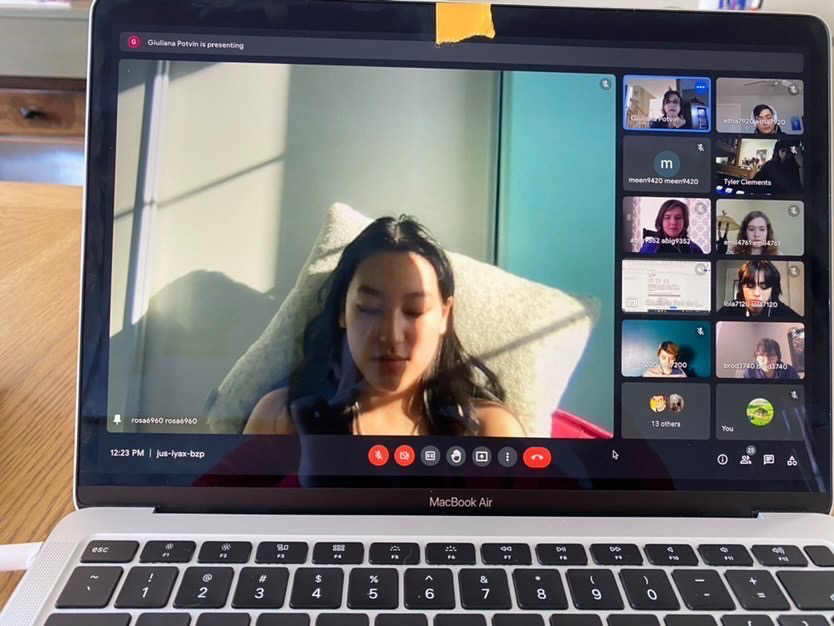
Rosa Yu, a Simcoe County District School Board student in Barrie, Ont., said remote learning has had an impact on her high-school friendships. [Photo courtesy of Rosa Yu]
Rosa said this has also affected her relationships. “My classmates and I, we are acquaintances at best, even after four years together,” she said. Rosa, who went to a school outside of her catchment area for a special program, described trying to make friends in a remote environment:
“Even though people think you can develop friendships online, especially with our generation, it just doesn’t feel the same because you may not have those like deep talks and emotional talks,” she said, adding that students fall into a pattern of “sending Snapchats back and forth.”
“It all feels superficial after such a long time of quarantine.”
Algebra, chemistry and Shakespeare are the tip of the iceberg. Beneath the surface, essential social-emotional skills – stress management, listening, asking for help, self-control, collaboration and empathy, among others. These skills have been linked to improved behaviour and academic performance. For teens and pre-teens, school is a huge part of identity formation, Clinton said.
Aisha Mahmoud, a Hamilton high school student, says students were not only robbed of the academic and social experiences of high school, but also the soft skills that are learned along the way. Recent cohorts, she says, are less equipped coming out of the pandemic than their predecessors.
“School is such a great place for learning, but not just about like English and math and science, but also about day-to-day life, like managing a schedule or managing your own wellbeing, whether that’s your physical wellbeing or your mental well-being,” she said.
Early years
One Canadian study looking at the impact of school closures on kindergarten students suggested the youngest learners “may experience the longest lasting impacts from this pandemic.”
More than half of Ontario kindergarten educators surveyed said they interacted with students online for 30 minutes or less during the initial shutdown in 2020. Prior to the pandemic, students received full-day instruction in the two-year kindergarten program.
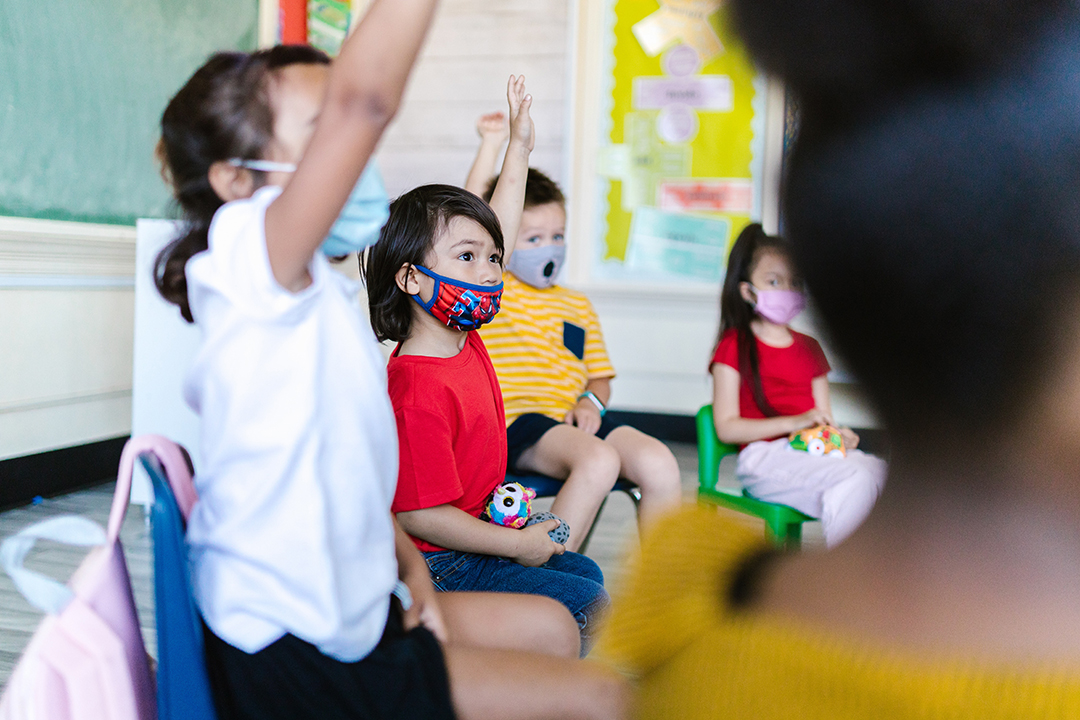
As the TDSB report showed, fewer kids were reading at grade level – add to that all the kids who simply skipped kindergarten, which is not mandatory in Ontario, to avoid remote learning and pandemic restrictions, such as mask-wearing and doing activities alone at a desk instead of with a group of kids – part of provincial guidance for periods of the school year – to reduce the risk of transmission.
“I know that she wouldn’t have thrived in a rigid school environment,” Price said of her youngest daughter, who didn’t start junior kindergarten in 2020.
Instead, she stayed home, occasionally joining activities with other kids at Price’s home daycare. Price said neither was a good option. “She was a feral child roaming the house, basically,” says Price.
When she started in-person senior kindergarten last year, restrictions still existed. “There still wasn’t play-based learning, it was individual play-based learning, so you had to get a bin and sit at your desk with your plexiglass, and there was no free roaming, there was no collaborative play,” Price said.
Kids’ mental health: ‘We’re seeing the breaking point’
The fall after the pandemic began, Jamie Price’s middle daughter, then in Grade 4, spiraled into a depression.
The student, who has ADHD, had struggled with remote learning, which involved a lot of independent work and little facetime with teachers and peers, the previous spring. But, still, the family thought an improved, structured remote program would be better for their daughter than the unfamiliar rules of at school.
They quickly realized she couldn’t do remote learning, and switched to a curriculum-based homeschool program. But their daughter continued to suffer.
“By October, she had sort of slammed down into a deep, dark, anxious, depressed state where anything we asked her to do was met with a lot of resistance,” Price said. “She was on her iPad from the time she woke up until the time she went to bed. She only got up to use the bathroom.”
It got worse. First, “eating became a challenge,” she said. Then, her daughter was diagnosed with avoidant/restrictive food intake disorder (ARFID), which causes kids to be extremely picky eaters and have little interest in food. The disorder can lead to poor nutrition, stalling development.
“From breakfast until bedtime it was like trying to get her to eat so we could avoid hospitalization,” Price said. “It was pretty extreme, it was dark, it was overwhelming.”
As the school year went on, her eating disorder took hold, until it reached a point where she would only get hungry late in the evening. And even then she would snack, rather than eat a meal.
“She started staying up until midnight, then one, then two,” Price said. “That was probably our darkest point, our hardest place.”
Years of isolation, uncertainty and stress has taken a toll on Ontario kids. Mental-health inpatient units at children’s hospitals are regularly full, a symptom of a bigger problem.
The pandemic had “troubling” impacts on child and youth mental health, according to a February 2021 report from researchers at The Hospital for Sick Children (SickKids). Mental health, they found, was “mostly worse, occasionally better.”
“A lot of what the kids’ mental health is like has to do with the mental health of the adults in their life,” said Clinton, the child psychiatrist. “The wellbeing of educators has really taken a hit during this period of time.”
Teachers, who had no choice but to repeatedly pivot learning models, risk classroom exposure to the virus and put in extra hours to support struggling students began to burn out, many choosing to retire or leave the profession.
“There’s no question that the staff … have worked heroically over the last two and a half years,” said Pat Daly, president of the Ontario Catholic School Trustees’ Association (OCSTA), which represents trustees at separate school boards across the province. “The uncertainty for sure took a toll.”
The “volume of work” grew dramatically, as educators communicated more frequently with parents, managed a variety of learning models, verified staff vaccination status and responded to the human-resources crisis that emerged as classroom teacher absences surged.
Parents, too, found themselves in a precarious state. A McMaster University survey of nearly 7,500 Ontario parents more than a year into the pandemic showed found that 69 per cent had experienced depression and half had sought professional help for mental-health concerns since the beginning of the pandemic. Twenty-eight per cent reported a loss of income, and 56 per cent reported weight gain.
“If the adults aren’t well and the kids are struggling, then they don’t have the kind of support that they need,” Clinton said.
In the October 2021 study, conducted by researchers at the Offord Centre for Child Studies at McMaster University, thirty-six per cent of parents reported that the pandemic had a significant impact on their child’s emotional and mental health. In the McMaster University study, just 10 per cent of parents reported a positive impact of COVID-19 on kids’ mental health.
“If we think of the well-being of our kids as a barometer of how society is doing, then the barometer is saying we are at stage critical here,” Clinton said. “We’re seeing the breaking point.”
She said schools play an important role in a holistic, community-based approach to mental health as the demand for care outpaces the ability of our system to supply it.
“We are never going to be able to have enough clinicians to treat ourselves out of this problem that we’re having with mental illness and distress. We’ll never be able to see all these kids one on one,” Clinton said.
According to School Mental Health Ontario (SMHO), which provides direction to school boards, a three-tiered approach to supporting students’ mental health, starting with creating an environment where students feel welcomed and that they belong, is most effective. The second and third tiers say staff should “notice and support” students who need extra staff, and help families access external services when necessary.
“That means that we don’t think about mental health as being in the domain just of health, but it is very deeply rooted in creating good health in school and having supports for kids that happen in school,” she said. “We need to be thinking differently.”
Pandemic ‘exacerbated existing inequities’
International and Canadian evidence suggests school closures disproportionately harmed vulnerable people, including those from lower socioeconomic backgrounds, racialized children and youth, newcomers and students with disabilities.
These are the groups that were already more likely to struggle in school pre-pandemic.
“It has been very, very traumatic,” said Leo Johnson, executive director of Empowerment Squared, a non-profit serving newcomers to Hamilton. “Most of these families that we serve were already living in a pandemic.”
Some, he said, were victims of the “pandemic of poverty,” while others struggled to integrate into the education system or access basic needs, such as healthcare and housing.
“When the pandemic hit, whatever little access we were having to resources or support systems … got completely cut off,” said Johnson, a social entrepreneur from Libera who spent eight years in refugee camps before coming to Canada.
He says the greatest impact on families was the “destruction of the family unit.”
“Parents became extremely vulnerable, in a way, and their kids could not even look at them as parents because they could do nothing to help them,” Johnson said.
While some parents stocked up on groceries, bought remote-learning technology, like iPads and laptops, and registered their kids for virtual afterschool activities, others could not.
“Their parents were making decisions about them dropping out of school because there were three of them in the house and they need three computers to be online in virtual school at the same time. And the parents were like, ‘Sorry, I don’t have one’”, he said. “While other parents were looking for ways to support their children, most of these families were looking for ways to get out of the whole online thing that didn’t make sense to them.”
The pandemic cemented existing and created new challenges for newcomer families and others living in poverty.
“Online learning is the most inequitable for kids who don’t have space to work and are living in cramped apartments and have to share equipment or don’t have very good Internet access or don’t have much Internet access at all,” said Judith Bishop, a former Hamilton trustee and student advocate.
York University’s Carl James, who researches the educational inequalities affecting Black students, wrote about the way in which the pandemic is exacerbating educational challenges facing Black and racialized students. Black and racialized families, who are more likely to live in poverty and work frontline jobs, at once have more exposure to risks and fewer resources to bridge the gap, he argues. For kids during the pandemic, this might mean decreased physical activity, fewer nutritional meals and little academic support and accountability at home.
“It exacerbated existing inequities,” Bishop said “The students who chose online learning … were all those from the high-priority school areas, because that’s where the most infection.” High-priority is a term used by some boards to describe schools in areas that face greater socioeconomic challenges.
Also driven by socioeconomics were vaccination rates among students. In Toronto and Hamilton, students at schools in lower-income areas were less likely to be vaccinated than those in higher-income areas. A myriad of barriers – job flexibility, child care, transportation to and from clinics and language barriers, among them – and skepticism, an attitude prevalent in groups that distrust the system that has failed them, contribute to this disparity.
The result is increased risk of exposure to COVID leading to more disruption to learning for lower-income students.
Heather Fudge, who teaches French at Queen Mary Elementary School in central Hamilton said the academic and social-emotional disparities among students have grown significantly during the pandemic, and catching kids up is “a struggle for all teachers in the classroom.”
“How do we reach the lowest kids, the poorest kids, the kids that have the most behavioral problems, the kids who have the most learning problems,” she wonders. “Because there are already not enough resources.”
What we know about how kids are doing
A patchwork of research points to devastating effects on kids, especially those who were already struggling before the pandemic.
Experts say the pandemic created few new problems, but exacerbated existing ones.
Here’s what we know about the pandemic’s toll on kids:
- Ontario students have reported insufficient and/or inconsistent access to internet and technology throughout the pandemic, posing a technological barrier to learning;
- Absenteeism increased;
- Early reading was stalled at Ontario’s largest school board;
- Nearly half of all Ontario schools offered no extracurricular activities, which include sports, performing arts, music and field trips, in 2020-21;
- Mental health visits to children’s hospitals have skyrocketed;
- A majority of Canadian parents reported in July 2020 concerns about the amount of time their kids spent looking at screens;
- The pandemic has disproportionately affected vulnerable students, including those from lower socioeconomic backgrounds, racialized children and youth, newcomers and students with disabilities.
What we don’t know outweighs what we do, some experts say. Ontario schools were closed longer than anywhere else in North America, yet the province has little data to show what the effects were on students.
McMaster University’s Karen Robson addresses this in a 2021 essay, explaining that a lack of Canadian education data, in particular race data, places “extreme limitations” on researchers.
The quality of Canadian data, she writes, is “pale in comparison to those available in other countries,” such U.S. and UK. By not measuring it, the problems do not go away, but instead get buried and ignored,” Robson argued.
In Ontario, this trend has persisted throughout the pandemic, making it impossible to know what can and should be done to fix the problem.
“We don’t have Canadian studies because we abdicated our responsibility to track educational harms in Canada,” said Kelly Gallagher-Mackay, a researcher at Brantford’s Laurier University who studies educational inequality.
How does a government address a problem it hasn’t identified?
Province’s ‘catch-up’ plan a missed opportunity: expert
According to the province, nearly 50,000 students – about 2.5 per cent – are participating in board-run tutoring programs, as part of the government’s plan to help students “catch up” after two and a half years of disrupted learning.
“Our government is looking ahead as we remain squarely focused on ensuring students receive the best stable learning experience possible, and that starts with them being in class, on time, with all of the experiences students deserve,” said Minister of Education Stephen Lecce, speaking from Viola Desmond Public School in Ajax, Ont., in late July.
The plan, largely based on the education budget released in February, includes “the largest tutoring program in Ontario’s history,” increased mental-health supports and “a modernized, skills-focused curriculum” to prepare students for the workforce, Lecce said.
The five-step recovery plan launched earlier this year includes plans for tutoring programs and reinstating last spring the controversial EQAO, an annual standardized test designed to assess students’ reading, writing and math skills that was paused for two years amid the pandemic. The test is in a new, digitized format that, according to the province, will “establish new baselines for EQAO achievement data and results,” meaning we can’t measure impacts on learning by comparing the 2022 and pre-pandemic results.
Regardless, experts have said some data is likely better than nothing.
Until recently, there has been limited funding – less than in other provinces and developed countries, experts say – for learning recovery. The province announced in February significant funding for a five-step recovery plan, that includes the following new and expanded programming:
- Measure and assess student learning levels, including in specific regions and on specific populations, and engage with partners to establish targets for learning recovery.
- Strengthen numeracy and literacy skills by introducing new or expanding existing learning-focused programs and tools.
- Build student resilience and mental well-being by stabilizing and increasing mental health funding and consulting to develop an approach for school-based supports, in alignment with the Roadmap to Wellness, Ontario’s mental health and addictions strategy.
- Introduce comprehensive tutoring supports through Ontario’s school boards that includes partnerships with community organizations and the expansion of existing online tutoring programs through Mathify/Eureka!.
- Modernize education to better prepare students with important job and life skills, including updating curriculum and programs.
In addition, the government said it would provide $304 million in funding for additional staff to support learning recovery and remote learning.
But are these the right supports and enough of them? Experts aren’t convinced.
Kelly Gallagher-Mackay said the plan is “generic” and the “scope and discretion are not aligned with the evidence.”
“The evidence for effective tutoring is in schools three times a week, tied to the curriculum,” she said. “By getting people to race to turn something around in six weeks, they’re kind of missing the opportunity to do it meaningfully.”
Gallagher-Mackay also wonders why the province isn’t asking schools to target tutoring based on student needs, which could have been identified by teachers last year.
“In order to get the money spent fast because they didn’t do this two years ago … they’ve given a six-week timeframe and then they’ve basically said, you can do anything that you can call tutoring right before and after school, during school hours, on weekends, in the summer,” she said.
At least one school board, many students improved literacy and numeracy during the spring tutoring session.
“The students were going from a Level 1 to Level 2 or Level 2 to a Level 3. They were improving from pre and post tests,” said Julie Angiollilo, superintendent at the Hamilton-Wentworth Catholic District School Board (HWCDSB).
To date this summer, more than 1,400 Hamilton Catholic board students have participated in tutoring programs.
But, arguably more importantly than academic evidence, is the feedback from tutors, which showed improvement in confidence, self-esteem, self-regulation, class participation and attitude toward learning.
The city’s public school board has partnered with the YMCA of Hamilton Burlington Brantford (HBB) to deliver tutoring to students. Lily Lumsden, the organization’s senior regional manager, said kids are “struggling with a lot of things,” and academics is only one of them. They’re having a hard time socially, after years of limited interaction, she said. They’re also struggling with behaviour management, especially in the classroom, she said.
“I can’t imagine trying to learn chemistry virtually,” she said. “For some of those subjects, you really need to be in person.”
Lumsden said her staff are working to reignite interest in learning and help students regain confidence. Students are no longer accustomed to a class debating themes in a novel or dissecting a frog with a lab partner. Lumsden believes this is where a lot of learning has been lost.
“You can’t have the same level of in-depth discussions that you on Teams that you could sitting in the classroom with your peers and with your teacher,” she said. “Your learning gets stunted.”
The plan isn’t all bad, said Gallagher-Mackay. But there’s one glaring failure: “there’s no equity piece here,” she said.
“It’s a shocking omission,” she said. “Every study suggests that the impacts of COVID have been … very unequally distributed and coming on top of that we already know is a very unequal system where there are huge equity challenges that we are only just beginning to reckon with.”
Gallagher points to de-streaming, which means students will no longer be separated into “academic” and “applied” courses in high school, as an example. The province eliminated streaming of Grade 9 math last year, and plans to do the same with all Grade 9 courses in the fall.
She said the challenges of equity should not only be address, but “put front and centre” when we talk about recovery.
“There’s nothing that would suggest that the harms of the pandemic have fallen unequally,” she said. “If we have had a decent and responsible process of monitoring, we would know where the problems were and where they’ve been getting worse, and we would have worked on this for three years.”
Aarthi Raman’s daughter isn’t behind – yet.
But her parents, who moved to Ancaster, Ont., a community in the municipality of Hamilton, from Edmonton mid-school-year in January, have put their daughter in private math tutoring, which involves twice-weekly online tutoring sessions in small groups.
“I felt like online schooling wasn’t doing much for her,” she said. “She was mostly with me attending online classes. I was helping out with all the classwork and homework and it was more like I’m teaching her.”
When they moved to Ancaster at the end of January, they registered their daughter for in-person learning with the local school board, hoping that learning would improve.
But the disruptions continued, with another two-week bout of remote learning amid a resurgence of the virus followed by several snow days, which “baffled” the former Edmontonian. Raman is worried her daughter won’t be at grade level in math and writing.
“Even in school, I couldn’t see her learning much,” she said of her daughter, who was in a Grade 1 and 2 split class at the Hamilton-Wentworth District School Board (HWDSB).
In a new report co-prepared by Gallagher-Mackay, researchers and stakeholders wrote that “recovery” isn’t enough. “Any path forward must include a commitment to system-wide transformation to overcome discrimination and harms too often associated with the status quo,” it says. In other words, it must address the pre-existing issues exacerbated by the pandemic.
This includes addressing achievement gaps, and issues around race and gender for a more inclusive school environment.
“The pandemic has really pulled back the curtain on some things that were not going well for education before the pandemic and need attention if we ever get through the pandemic,” said former deputy minister of education Charles Pascal. “Anything that resembles a new reality for education has to deal with all of those things.”
Though restrictions have lifted, the province continues to warn of high positivity rates and increased risk as the colder weather pushes Ontarians indoors.
Pascal, a professor at the University of Toronto, said these are “the most challenging times facing education in 100 years.”
Yet, the tutoring being offered does not align with research and class sizes have not shrunk, he said.
“They have no they have no effective recovery plan at all.”
Some students ‘thrived’
But not all kids have struggled. Some, Clinton said, have “thrived.”
“The kids who have done well are the kids who have had significant connections to others in their lives, significant connections to things that matter to them,” she said.
This could mean strong family and friendships, or a hobby, like music or volunteering such as addressing climate change or poverty. Some students reported being better off in remote learning than in the classroom, as it alleviated academic anxiety or social abuse, such as bullying. For these students, remote learning was a relief.
Students who enjoy working by themselves, at their own pace and those who are easily distracted in the classroom have also reported enjoying the freedom and flexibility of remote learning. But experts say that while being removed from the classroom provided temporary relief, kids learn important lessons when they have to face, rather than avoid, problems at school.
Researchers at Memorial University of Newfoundland found that online learning made aspects of some students’ lives easier. In a recent study, a newcomer student in Grade 4 said the new format gave him “catch-up” time and a “welcoming space” to improve his English, Anne Burke, a professor in the university’s faculty of education wrote. Some children reported they preferred the distraction-free environment of the home. (However, other students have reported increased disruptions, including siblings, pets and online games, among others).
Parents were also more involved in their kids’ education.
“We found in our study that parents also played a larger role in daily education, both learning from and assisting in teaching their children,” Burke wrote.
Through surveys and interviews with parents and teachers, a team of McMaster University researchers found that “situation of online schooling is more complex than a simple ‘good’ or ‘bad’”, the authors wrote.
“We think it’s important to ask for whom and when is online learning a good fit,” they wrote.
In their 2021 study, students reported advantages to online learning, including “the lack of bullying, peer pressure and social anxiety,” as well as the comfort of learning from home, extra sleep and more time with family.
The study also shows that online learning removed barriers to inclusion for some kids with physical disabilities. One parent in the study said their child, who used a computer for school before COVID, didn’t feel like they were “standing out” during remote learning. They were also able to help other students due to their digital-learning skills.
“We must address the reality that testimony of positive experience in this alternative format demonstrates the need for multiple approaches,” the authors wrote. “Conversations about what post-COVID schooling looks like must consider the reality that traditional learning formats often fail marginalized students.”
For a minority of students, technology opened a previously closed door to a new model of learning. For others, it was the glue that held together – if barely – the broken pieces of two and a half school years.
Even those who struggled in remote learning saw positive outcomes of the pandemic.
Jamie Price, the Hamilton parent, said there were “silver linings” for her family, who were stuck in a “pressure cooker of a house” for nearly two years: “It’s, I’d say, brought us all a lot closer together.”
Amid fears around the virus – and concerns about the government’s handling of it – Kaden Johnson started speaking out on behalf of Ontario students. He is avid tweeter, regularly sharing his thoughts on education policy.
Student voice: What do kids and teens need to recover?
Kids are suffering, but they’re not hopeless.
“I feel prepared to handle the challenges that come,” said Kaden Johnson, the Mississauga student who has learned remotely since the pandemic first began. “But I know that it’s going to take some time to adjust.”
Here’s what Ontario students and their families say they need as they look ahead to a new school year:
“Fun,” said Arianna Chua, a Halton Catholic District School Board (HCDSB) student from Milton. “That’s probably one of the biggest things our students want.” Arianna said students want to “live like teenagers,” which means dances, clubs, sports and friends – not be “stuck in the COVID-19 era of not socializing.” Acting out is a “subtle call for help,” they said.
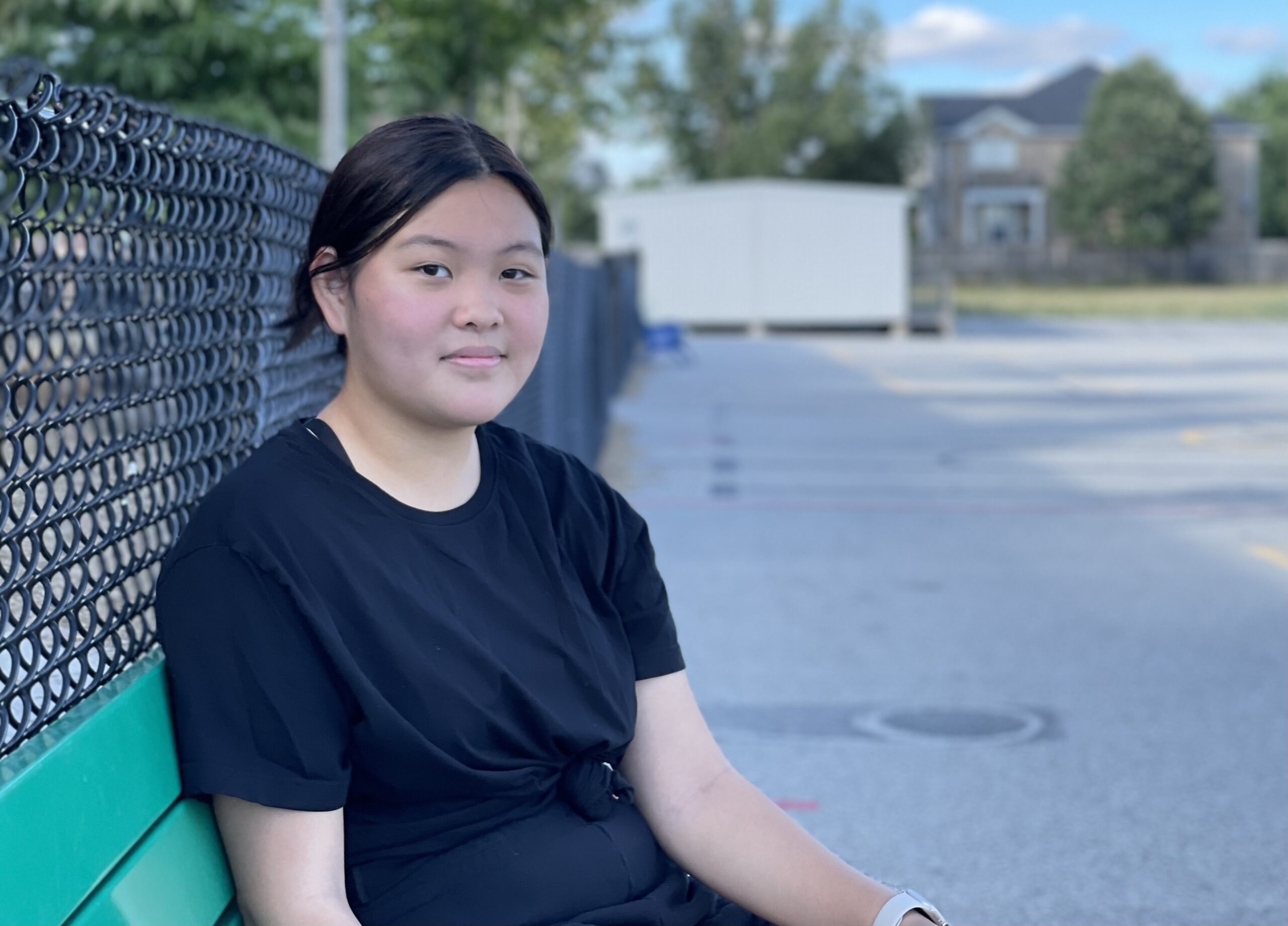
Image caption. [Photo © Kate McCullough]
Arianna said students need professional support, but they also need empathy from caring adults.
“We have come from something so traumatic, something that has affected us so much,” they said. “Be patient and listen to our students.”
Ava Beggs, who lives in a remote town south of Algonquin Park, said her community has a shortage of mental-health workers and deep-seated stigma around getting help.
“We need to get more people to help support kids,” said Ava, whose anxiety heightened during the pandemic.
She also said students need educators “designated to help people catch up.”
“Some kids are just completely lost and if you don’t take your own time to catch up, you won’t get caught up,” she said.
Student leaders, including incoming OSTA president Aisha Mahmoud, joined educators at the Ontario Public School Board Association (OPSBA) conference this summer to tackle the topic on everyone’s minds: pandemic recovery.
Aisha said three major themes – recovering learning lost, supporting student mental health and addressing systemic inequity and racism illuminated by the pandemic – have emerged as top priorities for students in the coming years.
“Getting back to normal is really important,” she said. “But, at the same time, it’s like we kind of have an opportunity to re-evaluate.” One example, she said, is the near-elimination of exams as a major assessment tool during the pandemic, which eased end-of-year stress and offered more varied opportunities to demonstrate knowledge.
Aisha said after focusing for years on students’ pandemic struggles, she’s set her gaze on the future.
“What’s it going to be like after?” she mused. “We’re at a turning point.”
Sources
- Kaden Johnson, student at York Ditrict School Board
- Sabia Irfan, student at Ottawa-Carleton District School Board
- Aisha Mahmoud, Ontario Student Trustees’ Association (OSTA) president and Hamilton student
- Jazzlyn Abbot, student at Renfrew County District School Board
- Ava Beggs, student at Renfrew County District School Board
- Rosa Yu, student at Simcoe County District School Board
- Arianna Chua, student at Halton Catholic District School Board
- Muhammad Bajwa, student at Halton Catholic District School Board
- Aarthi Raman, parent of a Hamilton-Wentworth District School Board student
- Jamie Price, parent of Hamilton-Wentworth District School Board students
- Annie Kidder, executive director of People for Education
- Leo Johnson, executive director of Empowerment Squared
- Kelly Gallagher-Mackay, education researcher at Laurier University in Brantford, Ont.
- Judith Bishop, former trustee and child advocate
- Jean Clinton, child psychiatrist
- Pat Daly, Ontario Catholic School Trustees’ Association (OCSTA) president
- Allison Smith, Kenora superintendent
- Heather Fudge, Hamilton teacher
- Julie Angiollilo, Hamilton-Wentworth Catholic District School Board superintendent
- Lily Lumsden, senior regional manager, YMCA of Hamilton Burlington Brantford (HBB)
- Charles Pascal, former deputy education minister and professor at the University of Toronto